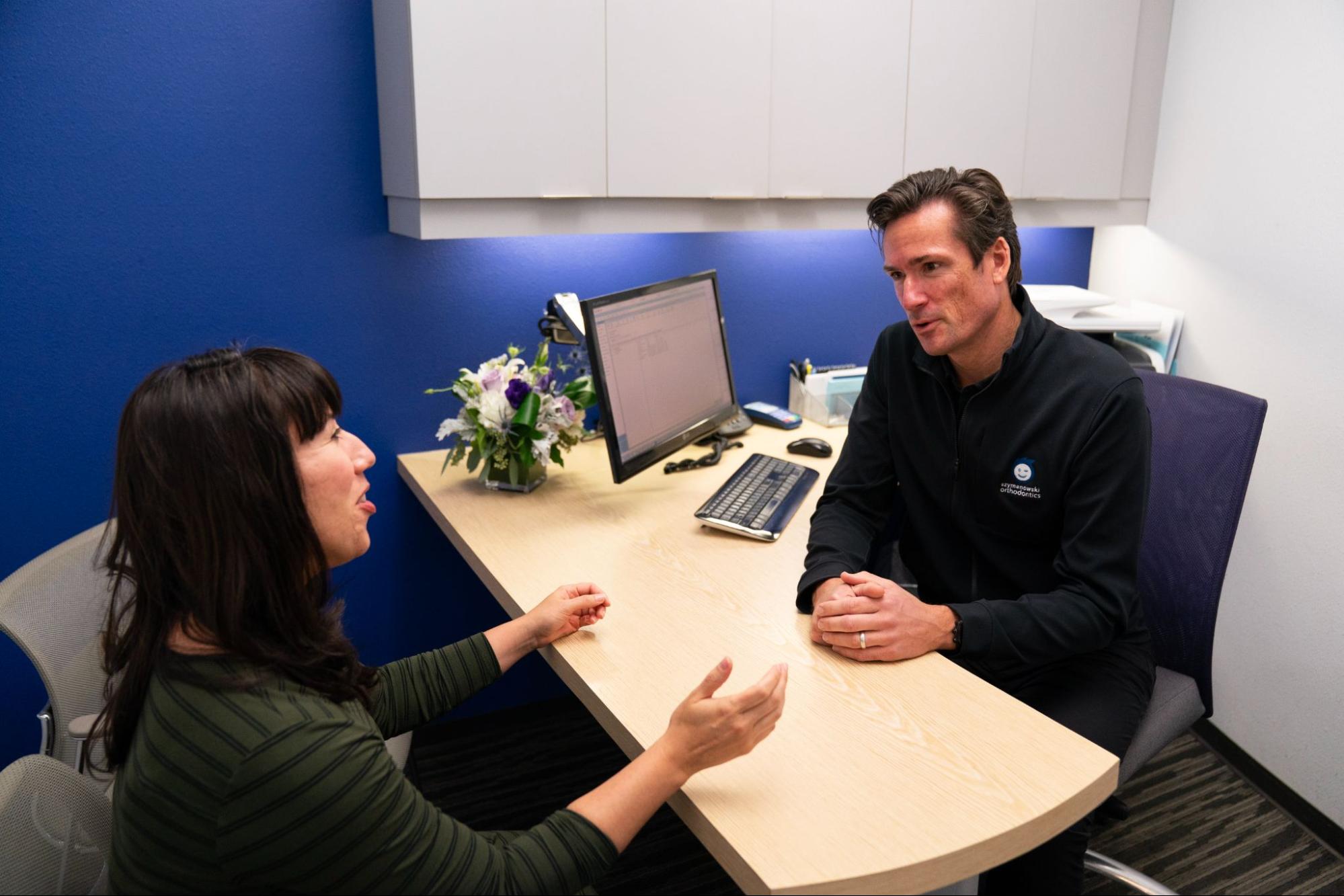
Finding the right expert orthodontist can feel overwhelming with so many options available. The good news? A little research goes a long way toward finding a specialist who fits your family’s needs. This guide walks you through what you need to know about orthodontic care, from understanding what orthodontists actually do to comparing treatment options and what your investment looks like.
Everyone deserves the smile you’ve always wanted, and always deserved, and the path there starts with knowing what to look for in a provider. Whether you’re considering treatment for yourself, your teen, or your child, the information below will help you make a confident decision.
What Is an Orthodontist and What Do They Do?
An orthodontist is a dental specialist who completes two to three additional years of training after dental school, focusing exclusively on straightening teeth and correcting bite alignment. They diagnose and treat misaligned teeth and jaws using appliances like metal braces, clear ceramic braces, and Invisalign to guide teeth into proper position.
That specialized education covers the science of tooth movement, jaw development, and facial growth patterns in depth. Orthodontists treat malocclusions, which is the clinical term for misaligned teeth and jaws. Common issues include crowding, gaps between teeth, overbites, underbites, and crossbites.
What sets an expert orthodontist apart from a general dentist? Think of it this way: all orthodontists are dentists, but not all dentists are orthodontists. According to the American Association of Orthodontists, out of 100 dental school graduates, on average only six go on to become orthodontists. This extra training means orthodontists see complex alignment cases every single day.
Orthodontists treat patients of all ages. Children, teens, and adults can all benefit from treatment at every stage of life.
How Orthodontic Treatment Works: Step-by-Step Process
Orthodontic treatment follows a clear, predictable process that typically spans 12 to 24 months. Here’s how it unfolds:
Step 1: Free Smile Exam
Your first visit includes an oral examination where your expert orthodontist assesses your teeth alignment, bite relationship, and jaw position. This visit is always free.
Step 2: Digital Records and Treatment Planning
Next, digital photographs, digital records, and 3D scans of your teeth are taken. These records create a complete picture of your mouth and help map out your treatment plan customized just for you.
Step 3: Custom Treatment Plan
Based on those records, you’ll receive a detailed plan outlining which appliance works best, how long treatment will take, and what your investment will be. You’ll know what to expect before anything starts.
Step 4: Appliance Placement
Whether you choose metal braces, clear ceramic braces, or Invisalign, this visit gets your treatment underway. Braces are bonded to your teeth, or you receive your first set of Invisalign trays.
Step 5: Regular Progress Visits
From there, you’ll return every four to eight weeks for adjustments. These visits keep your treatment on track and let your provider monitor your progress.
Step 6: Retainer Phase
Once your braces come off or you finish your last aligner, you’ll wear retainers to maintain your results. This phase is essential for keeping your new smile in place.
Benefits of Seeing a Specialist Orthodontist
Choosing a specialist over a general dentist for your alignment treatment offers several advantages worth weighing carefully.
Why Does Focused Expertise Matter?
Orthodontists spend their entire careers studying tooth movement and jaw development. Complex cases that might challenge a general dentist are routine for a specialist. That depth of experience translates directly into better diagnosis and smarter treatment planning for your specific case.
What Technology Do Specialists Use?
Specialist practices invest in the latest tools like 3D imaging, digital treatment planning, and precise bracket systems that improve accuracy and patient comfort. Modern technology also shortens treatment times in many cases and gives you a clearer picture of where you’re headed before you ever start.
What Other Benefits Should You Expect?
- Better long-term outcomes thanks to specialized training in biomechanics, which means an expert orthodontist knows exactly how much force to apply and when
- A full range of options, from metal braces to clear ceramic braces to Invisalign, with honest recommendations about what truly fits your situation
- Healthier teeth and gums over your lifetime, since straight teeth are far easier to brush and floss properly
- Functional improvements like better chewing efficiency, clearer speech in some cases, and less strain on your jaw joints
Ivy League-trained orthodontists, for example, are prepared to handle everything from simple crowding to complex bite corrections. That kind of expertise makes a real difference in your final results.
Comparing Treatment Options: Braces vs. Invisalign vs. Ceramic Braces
| Feature | Metal Braces | Clear Ceramic Braces | Invisalign |
|---|---|---|---|
| Visibility | Most visible | Tooth-colored, less noticeable | Nearly invisible |
| Durability | Extremely durable | Durable, brackets can stain | Requires careful handling |
| Typical Treatment Time | 12-24 months | 12-24 months | 6-18 months |
| Diet Restrictions | Yes (avoid hard, sticky foods) | Yes (same as metal) | None (remove to eat) |
| Best For | Complex cases, all ages | Patients wanting less visible braces | Mild to moderate cases |
| Maintenance | Brushing around brackets | Brushing around brackets | Remove, brush, replace |
Metal Braces
Metal braces remain the most reliable option for complex alignment issues. Today’s high-tech braces feel lighter and a lot more comfortable than older versions. They’re also typically the most affordable choice.
Clear Ceramic Braces
Clear ceramic braces work just like metal braces but use tooth-colored brackets that blend with your smile. They’re harder to notice compared to the metal version, making them popular with teens and adults who want something less obvious.
Invisalign
Invisalign takes traditional orthodontics and corrects your smile subtly and discreetly. These clear aligners give you comfort, flexibility, and beautiful results. Wear each set of trays for about 22 hours daily, removing them only to eat and brush. With no wires to tighten and no brackets to adjust, daily cleaning takes only a minute or two.
An expert orthodontist will recommend the best option based on your specific needs. During your free smile exam, you’ll learn which approach will give you the best results.
How Much Does Orthodontic Treatment Cost?
Orthodontic investment varies widely based on case complexity, treatment length, and the type of appliance you choose. Most patients find that mild cases finish faster and cost less, while complex bite corrections require longer treatment and a larger total investment. Insurance benefits and flexible financing options can make treatment affordable for most families.
| Factor | Impact on Investment |
|---|---|
| Case Complexity | Higher complexity = higher investment |
| Treatment Duration | Longer treatment = higher total fees |
| Appliance Type | Metal braces typically most affordable |
| Geographic Location | Investment varies by region |
| Insurance Coverage | Many plans include orthodontic lifetime maximums |
Several factors determine your orthodontic investment:
Case complexity plays the biggest role. Mild crowding takes less to correct than severe bite issues requiring longer treatment and more adjustments.
Treatment duration directly affects fees. A case finishing in 12 months will generally require less investment than one needing 24 months of care.
Appliance type matters too. Metal braces are typically the most affordable option, while Invisalign and ceramic braces may require a larger investment.
Insurance benefits can help significantly. Many dental plans include orthodontic coverage with a lifetime maximum that you can put toward your treatment.
Beautiful smiles should be accessible to everyone. That’s why most reputable practices offer flexible financing and multiple payment plans designed to fit your family’s budget. A free first visit lets you understand the full investment before committing to anything.
Who Is a Good Candidate for Orthodontic Treatment?
Almost anyone can benefit from orthodontic treatment. Here’s how candidacy breaks down by age:
Children (Age 7+)
The American Association of Orthodontists recommends children have their first orthodontic evaluation by age seven. By this age, your child’s teeth have developed enough for an expert orthodontist to spot subtle problems with jaw growth and emerging teeth before all baby teeth are lost. Early treatment may prevent or intercept more serious problems from developing.
Teens
The teenage years are often ideal for treatment. Most permanent teeth have erupted, and jaw growth can be guided during this active development phase. Teens also tend to heal quickly and adapt well to braces or Invisalign.
Adults
There’s no upper age limit for orthodontic treatment. If your teeth and gums are healthy, you can achieve a straighter smile at any age. More adults than ever are choosing treatment, and options like Invisalign make it easy to straighten your teeth without anyone noticing.
Common Issues We Treat
- Crowding or overlapping teeth
- Gaps and spacing
- Overbite (upper teeth protrude over lower)
- Underbite (lower teeth sit in front of upper)
- Crossbite (some upper teeth sit inside lower teeth)
- Open bite (front teeth don’t touch when back teeth are closed)
Good oral hygiene and commitment to your treatment plan are essential for success. If you have active gum disease, your dentist may recommend treating that first before starting orthodontics.
Frequently Asked Questions About Orthodontic Treatment
How long does orthodontic treatment take?
Most treatment plans last between 12 and 24 months, though this varies based on your specific needs. Simple cases may finish faster, while complex bite corrections can take longer. During your free smile exam, an expert orthodontist will give you a realistic timeline for your situation.
Does getting braces or Invisalign hurt?
You may feel mild soreness for a few days after getting braces or starting new aligner trays. This is normal and means your teeth are moving. Over-the-counter relief and soft foods help during this adjustment period. Most patients find the process much easier and painless than they expected.
How often are orthodontic visits?
Plan on visiting every four to eight weeks during active treatment. These visits are typically quick, often 20 to 30 minutes. Most practices offer easy scheduling to fit your life, and an expert orthodontist will work to make each visit efficient.
Can adults get braces or Invisalign?
Absolutely. Adults make up a growing portion of orthodontic patients. As long as your teeth and gums are healthy, age is not a barrier. Many adults choose Invisalign for its discreet appearance, though all options work well for adult patients.
Will I need to wear a retainer?
Yes. Retainers are essential for maintaining your results. Most patients wear retainers full-time at first, then transition to nighttime wear. Many orthodontists recommend wearing retainers long-term to keep teeth from shifting back over time.
What’s the difference between an orthodontist and a dentist?
Both are dental professionals, but an expert orthodontist completes additional specialty training focused exclusively on tooth alignment and bite correction. Think of orthodontists as the specialists you see specifically for straightening teeth, while general dentists handle cleanings, fillings, and overall oral health.
How do I choose the best orthodontist for my family?
Look for a board-certified specialist with advanced training, modern technology like 3D imaging, and a friendly team that makes you feel comfortable. Read patient reviews, ask about financing options, and take advantage of a free smile exam to meet the provider in person. The right fit matters as much as credentials.
 Dr. Szymanowski