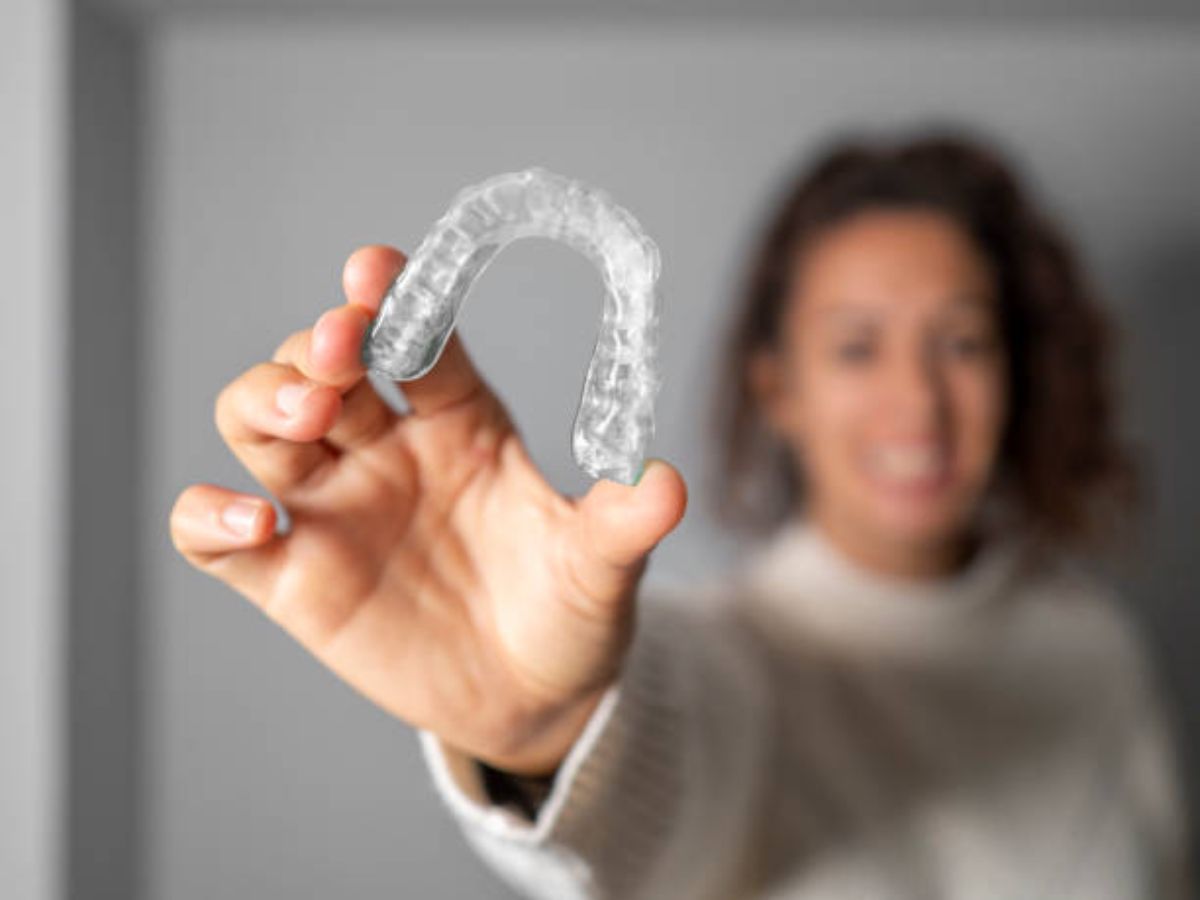
If you’ve started researching Invisalign, you’ve probably noticed something in treatment photos: small tooth-colored bumps on certain teeth. Those are Invisalign attachments, and they’re one of the biggest reasons today’s clear aligners can handle so many different smile corrections. Understanding what they are, why you may need them and what to expect can help you feel more informed and confident as you weigh your treatment options.
This guide walks you through how attachments work and how they affect your daily routine, so you can make the most of your Invisalign treatment experience.

What Are Invisalign Attachments?
Invisalign attachments are small, tooth-colored shapes made of dental composite resin that are bonded directly to specific teeth to help your clear aligners grip and move them more precisely. They’re sometimes called Invisalign buttons, bumps on teeth or SmartForce attachments, and they act like tiny handles that give your aligners something to push and pull against.
The composite is color-matched to your enamel, so most people won’t notice them from a conversational distance. Attachments come in several shapes, including rectangles, triangles, ellipsoids and beveled forms, and each shape is chosen for a specific type of tooth movement.
Attachments are temporary. Dr. Damon Szymanowski places them at the start of your Invisalign treatment and removes them once your smile reaches its final position. They’re a key part of what makes modern clear aligner treatment so effective and so versatile for a wide range of alignment concerns.
How Invisalign Attachments Work
Think of attachments as anchor points. Without them, aligners simply slide over your teeth with smooth, even pressure. That works well for minor spacing or crowding, but more involved movements need extra leverage. Attachments give your aligners that leverage by increasing the contact surface area between the plastic and the tooth, which allows for more controlled, predictable force.
This is what makes complex tooth movements possible with Invisalign today, including:
- Rotations of round teeth like canines and premolars
- Extrusions, which bring short teeth down into better alignment
- Intrusions, which push longer teeth up into the gumline
- Root torque, which tips the root of a tooth without changing the crown position
The placement process is quick and simple. Here’s what happens at your bonding visit:
- Your teeth are cleaned and dried.
- A mild etching gel is applied to prepare the enamel surface.
- A clear template (made from your aligner mold) is filled with composite and seated over your teeth.
- A curing light hardens the composite in seconds.
- The template is removed, and your attachments are polished smooth.
The whole thing is easy and painless. There are no injections, no numbing and no grinding of the tooth.
At the end of your Invisalign treatment, Dr. Damon gently polishes the attachments off your teeth. The enamel underneath is untouched, and your smile is ready for retainers.
Why You May Need Attachments: Key Benefits
Attachments have changed what Invisalign can do. Cases that used to require metal braces can now be treated successfully with clear aligners, largely because of how much more precise tooth movement has become.
How Do Attachments Expand Invisalign’s Capabilities?
Attachments make it possible for Invisalign to treat moderate and complex cases, including bite corrections, that once required metal braces. They improve how well your aligners track from stage to stage, so teeth move exactly as planned and your trays continue to fit properly throughout treatment. That precision is what keeps your treatment timeline predictable and on schedule.
Here’s a closer look at the specific benefits attachments bring to your plan:
- They expand what Invisalign can treat. Moderate and complex cases, including bite corrections, are now well within reach of clear aligners.
- They improve tracking. When teeth move exactly as planned, your aligners fit better at each stage, which keeps treatment on schedule.
- They allow rotation of round teeth. Canines and premolars have smooth, cylindrical shapes that are hard for plain aligners to grip. Attachments give the plastic something to grab.
- They help extrude short teeth. Sometimes a tooth sits too high in the gumline. Attachments allow aligners to gently pull it down into place.
- They support bite correction. Overbites, underbites, crossbites and deep bites often require force in very specific directions, and attachments make that possible.
- They can shorten overall treatment time. Better aligner efficiency means fewer refinement stages and a more predictable finish.
Why Do Attachments Matter for Complex Cases?
For more involved alignment issues, attachments are the difference between a good outcome and a great one. They give the aligners enough grip to move teeth in three dimensions, not just tip them side to side. That means rotations, intrusions, extrusions and root movements are all on the table with modern Invisalign. In short, attachments are what let Invisalign deliver the smile you want, even when your case is more involved than simple crowding or spacing.
Invisalign With vs. Without Attachments
Not every Invisalign patient needs attachments. Some mild cases can be treated with aligners alone. More often, though, attachments are part of the plan because they expand what’s possible.
Here’s a quick comparison:
| Feature | Invisalign Without Attachments | Invisalign With Attachments |
|---|---|---|
| Visibility | Virtually invisible | Small tooth-colored bumps visible up close |
| Case Complexity | Mild spacing or crowding | Moderate to complex alignment and bite issues |
| Tooth Movements | Basic tipping and simple shifts | Rotations, extrusions, intrusions, root torque |
| Treatment Predictability | Good for simple cases | Significantly improved for complex cases |
| Typical Attachment Count | 0 | 4 to 20 or more, depending on case |
It’s also worth knowing the difference between a few common Invisalign auxiliaries:
- Attachments are composite shapes bonded to teeth for aligner grip.
- Buttons are small hooks bonded to teeth to hold elastics.
- Elastics are small rubber bands that connect upper and lower teeth to correct bite relationships.
Each one plays a different role, and your treatment plan will specify which you need, if any. The trade-off with attachments is simple: slightly more visible bumps during treatment in exchange for noticeably better outcomes.
Do Attachments Affect Invisalign Cost?
In most cases, Invisalign attachments are included in the overall treatment fee and are not charged separately. You won’t see a per-attachment line item on your estimate. The real investment driver is case complexity, which also happens to be what determines how many attachments you need in the first place.
A straightforward case with minor crowding typically costs less than a complex bite correction, regardless of attachment count. Insurance plans that cover orthodontics usually treat attachments as part of the overall Invisalign treatment, not as an add-on.
At Szymanowski Orthodontics, we offer flexible payment plans and will check with your insurance company for orthodontic benefits to help make Invisalign work for your budget. A good consult should walk you through everything so there are no surprises. If you’d like to explore this in more detail, our financing and payment options page lays out what to expect.
Who Needs Invisalign Attachments?
Whether you need attachments depends on what your smile actually needs to do. Your orthodontist uses digital treatment planning software called ClinCheck to map every tooth movement before your aligners are ever made. That plan tells us exactly which teeth need attachments, what shape and where.
You may be a candidate for Invisalign with attachments if you have:
- Rotated teeth, especially canines and premolars
- Teeth that need to be extruded or intruded
- Bite issues like overbite, underbite, crossbite or deep bite
- Moderate to complex crowding or spacing
- A combination of alignment and bite concerns
Both teens and adults benefit from attachment-based treatment plans every day. Not every tooth gets an attachment. Placement is strategic, and only the teeth that truly need extra leverage will have one.
The only way to know for sure is to have your smile evaluated. Your free consult at our Sacramento office includes photos and X-rays, and Dr. Damon will walk you through what your treatment would involve. When you’re ready, you can schedule a free consult at your convenience.
Frequently Asked Questions About Invisalign Attachments
Are Invisalign attachments painful?
No, attachment placement itself is easy and painless. You may feel mild soreness or pressure for the first few days as your teeth begin to respond to the aligners, which is completely normal and usually fades quickly. Most patients describe it as awareness rather than soreness, and an over-the-counter pain reliever can help if needed.
Can people see my Invisalign attachments?
Attachments are made of tooth-colored composite designed to blend with your enamel. From a normal conversational distance, most people won’t notice them at all. Up close, you may see small subtle bumps, but they’re far less visible than metal braces brackets. Many patients forget they’re even there after a few weeks.
What if an Invisalign attachment falls off?
Call our office promptly if an attachment comes loose or falls off. It’s not an emergency, but it does need to be replaced quickly so your aligners continue tracking correctly. Keep wearing your current aligner as scheduled until you can come in. In most cases, a lost attachment can be re-bonded in a short visit.
Do Invisalign attachments stain?
They can, especially if you often drink coffee, tea or red wine, or if you smoke. The composite material can pick up pigments over time. To keep them looking fresh, remove your aligners before drinking anything other than water, brush thoroughly around each attachment and keep up with regular cleanings. Any staining disappears when the attachments are removed at the end of treatment.
What is the 30-minute rule with Invisalign?
The 30-minute rule means you should limit the total time your aligners are out of your mouth to about two hours per day (ideally in short windows of 30 minutes or less at a time). Attachments only do their job when aligners are seated against them, so wearing your trays 20 to 22 hours a day protects your progress and keeps treatment on track.
How are Invisalign attachments removed at the end of treatment?
Removal is quick and comfortable. Dr. Damon uses a polishing instrument to gently buff the composite off each tooth, then smooths and polishes the enamel underneath. There’s no damage to your natural tooth structure and no numbing required. You’ll leave the visit with a smooth, clean smile ready for retainers. Many patients say the day their attachments come off feels almost as exciting as the day their final aligners come out, because the smooth, polished finish is the first real glimpse of the finished result.
Posted by Dr. Szymanowski