Sports Safety & Orthodontic Emergencies

Calling all athletes — this one is for you! Getting braces is a huge milestone for people of all ages, but if you’re an athlete working on your athletic career, you may be a little concerned about how they will affect your game. 

Many of our sports-minded patients are worried that they’ll have to put a pause on their favorite games while they go through treatment. Fortunately, that’s not the case. At Szymanowski Orthodontics, we treat athletes at all stages of their careers, from slow-pitch baseball to competitive cheerleading. 

Dr. Damon believes that nothing should hold you back from a beautiful smile. With the proper care, you’ll be able to tackle the field and get your smile in gear, all at the same time. Read below to find out how to keep yourself safe with braces – and what to do if you get hurt. 

Choose Your Treatment

Like most of our patients, the most important step for athletes is choosing the treatment option that fits their lifestyle. Be sure to tell us that you’re living an active life, what sport you’re involved in, and when you’ll be starting. All of this information can help us determine which orthodontic treatment method will work best for you so that you can keep your head in the game. 

Lucky for you, our team at Szymanowski Orthodontics has a range of different treatment methods that will make your choice easy. 

Metal Braces

As the traditional option, metal braces are often the first that come to mind when considering orthodontic treatment. These braces work by tightening the wire attached to a bracket glued to each tooth. With gentle, continuous pressure, your teeth are aligned over a period of 12-36 months, depending on the severity of your case, your mouth’s response to treatment, and your desired outcome. With metal braces, you will need to wear a mouthguard to protect yourself when engaging in physical activity.

Clear Braces

Clear braces work the same way as metal braces. The difference is that clear braces use white ceramic brackets that blend in with the color of your teeth and provide a less noticeable appearance. Because this method is almost identical to metal braces, you’ll need to wear a protective mouthguard with these as well. 

Invisalign

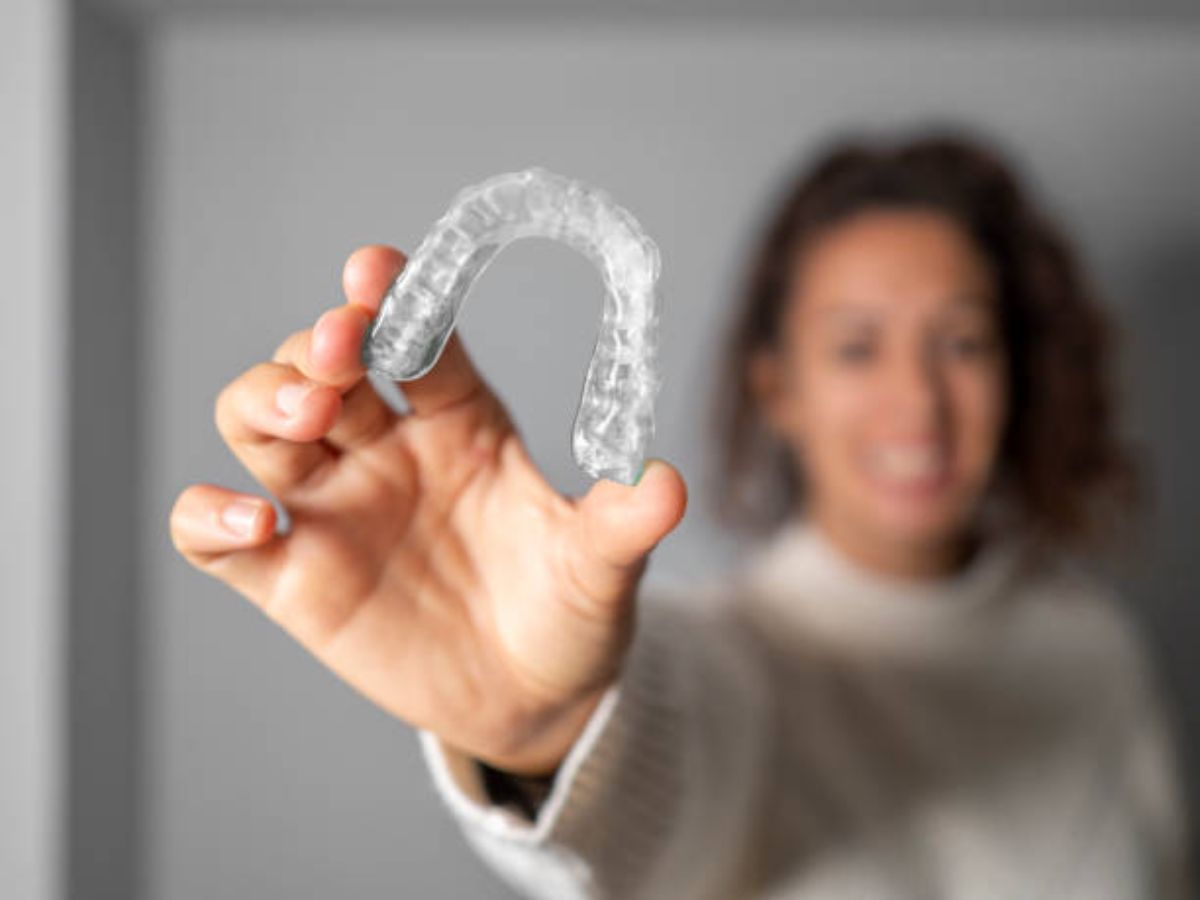
This removable treatment option uses a series of clear trays that adjust your teeth without the use of wires or brackets. Because they are clear, this option allows you to straighten your teeth with an almost invisible look. By wearing these trays for 22 hours per day for 9-15 months, you’ll see results in no time. With this treatment method, you could simply remove the trays for the duration of the physical activity – but don’t forget to put them back in as soon as you are done!

Sports Safety & Orthodontic Emergencies

Take Care of Your Braces — Wear a Protective Mouthguard

Whether you’re playing football, volleyball, gymnastics, or cheerleading, wearing a mouthguard is an absolute necessity. Most dentists recommend using a mouthguard during sports even if you don’t have braces, but it is especially important when you are undergoing orthodontic treatment. 

Not wearing a mouthguard means you risk harming yourself and your braces, which could be painful and expensive. The best way to ensure you can play your favorite sport and straighten your smile is to wear that mouthguard! 

Regular Sports Mouthguard

This mouthguard is designed for general sports use and can easily be found at any sporting goods store near you. Convenient and affordable, sports mouthguards protect your teeth, lips, and jaw from any blunt force that may occur while engaging in physical activity. 

While they are an excellent option for athletes without braces to consider, these may not be the best choice for athletes undergoing orthodontic treatment. That’s because they are not designed with braces in mind and may not even cover your teeth completely, meaning the risk of injury is still pretty high. 

Over-the-Counter Mouthguard

You can find these mouthguards at your local pharmacy. Because they are moldable, they offer a fit specific to your mouth. They are also an affordable and convenient option.

While they are far more protective than regular sports mouthguards, the over-the-counter option is not designed for use with orthodontics. Because they are meant to prevent individuals from grinding their teeth in their sleep rather than prevent injury, you may still experience a loose fit over your braces. 

Orthodontic Mouthguard

By far the best option for preventing injury and protecting your braces while you participate in athletics, the sole purpose of orthodontic mouthguards is to ensure your braces are safe on the field or in the gym. They are also designed to fit your braces precisely, giving you the best fit possible. Orthodontic mouthguards may be a little more expensive, but they are durable, long-lasting, and practical, meaning you should have no worries about after-school practice.

Remember, having any mouthguard is better than not having one at all – but make sure you consider your options carefully so that you can keep yourself safe no matter the sport you’re playing. 

Take Care of Yourself During an Emergency

Typically, athletes are aware of the general risks of participating in their favorite sport or activity. As with anything in life, you could get hurt. But this shouldn’t be a reason to worry, even if you’re living an active life with braces. We all know that accidents happen, but Dr. Damon has some tips for handling an orthodontic emergency if they do. 

The most important step is to stay calm and rest easy knowing that there are a series of trustworthy steps that you can take to ensure their injuries are taken care of. Common orthodontic injuries seen on the field include fractured teeth, missing teeth, or extruded or intruded teeth. 

It is critical to get immediate care if any of these injuries occur. Be sure to call your orthodontist as soon as possible to set up an appointment to address the orthodontic side of your injury. Depending on the severity of the case, you may want to go to the emergency room. 

Sports Safety & Orthodontic Emergencies

Keep Your Head in the Game With Szymanowski Orthodontics

Are you an all-star athlete? Szymanowski Orthodontics is your number one fan. Dr. Damon believes you shouldn’t have to choose between a great smile and your favorite sport. By following these guidelines, you’ll be on your way to victory. 

If you haven’t set up your free consultation yet, what are you waiting for? Let’s get started today. 

Tips for Brushing with Braces

One of the most exciting things about getting braces is looking forward to the day that you get them off. The goal is that when we remove your brackets, we’ll reveal perfectly straight, pearly white teeth and a bright and shining smile. Although getting your teeth straight is our job, the pearly white part? That’s your responsibility, and it requires knowing how to brush your teeth with braces. 

Whether you’ve just gotten your braces or you’ve been wearing them like a pro, it can be difficult to know if your teeth are truly being cleaned beneath all those brackets and wires. Between worrying about harming your braces and making sure your teeth stay bright and white, the process may feel overwhelming, but don’t worry! The Szymanowski Orthodontics team has all the oral hygiene tips and tricks you need to make sure brushing with braces is a breeze. 

Brush After Every Meal

It may feel like second nature to brush your teeth morning and night. However, when braces come into the picture, the best way to ensure your teeth are clean is to brush them after each meal. The reason is that plaque can form quickly after eating, and plaque has a lot more places to hide when braces and wires and rubber bands are on your teeth. Brushing after every meal means plaque never gets the chance to form, and even if you do miss a section when brushing, you are much more likely to clean it later if you are brushing your teeth more often. 

Use Your Home Care Kit

The day we put your braces on, Szymanowski Orthodontics will give you a goody bag filled with helpful tools that will help you keep your teeth clean. The essential items included in this kit are a toothbrush, proxabrush, and floss threader. Each of these tools allows you to clean around and between each bracket and tooth. 

A soft-bristled toothbrush is your recommended tool for brushing. The soft bristles protect the metal on your brackets. Your proxabrush is designed to scrub between brackets and underneath the wires so that you don’t have to worry about missing any sections. Some orthodontic toothbrushes even come with a proxabrush head. 

Your floss threader works like a needle to help you to floss beneath the wires to remove all food particles and hidden plaque

Tips for Brushing with Braces

Understand How to Brush

Even though this seems obvious, brushing teeth with braces is an added dental challenge! Because of this challenge, you may need to relearn some of your old brushing methods. 

To begin, you’ll need to use a gentle, circular motion with your toothbrush. Hold your brush at a 45-degree angle on the top and bottom of your brackets to be sure to clean each tooth thoroughly. That means you will be brushing in three different positions for each part of your mouth for at least 30 seconds each. 

Don’t forget to brush the backs of your teeth, along your gum line, and your tongue! Plaque is pesky and can hide anywhere!

Don’t Underestimate the Power of Rinsing!

Rinsing your mouth with water, mouthwash, or even a water flosser is a great way to maintain the cleanliness of your teeth throughout the day. Not only does rinsing keep your breath smelling fresh, but it also removes food particles that can easily become lodged in between brackets or teeth. You don’t want to “save your food for later,” and regular rinsing can help make sure you don’t.

Water flossers are excellent tools for keeping your mouth rinsed and clean. Like regular dental floss, water flossers like the WaterPik use a steady stream of water to dislodge food particles from those hard-to-reach places in your mouth. Although they can’t replace regular dental floss, they are a perfect supplement for your rinsing routine. 

Understand Why Brushing is Important 

If you have been brushing your teeth your whole life, it makes sense to wonder why you have to change your routine with braces. After all, isn’t brushing obvious? While the simple 2-minute method of brushing that your dentist taught you is the best way to manage your teeth without braces, it is only a foundation for brushing with braces. There are multiple extra steps you need to take when brushing with braces, and knowing why makes all the difference. 

Typically, poor brushing isn’t very noticeable until the day your braces are taken off. We sometimes find discoloration around the area the bracket was attached when this happens. Permanent white spots may form on your teeth, causing a bleached-out look on only some parts of each tooth. Because these spots form around the bracket, it can be very apparent that they are due to poor brushing around braces. In other cases, even more noticeable brown spots are left behind. 

For patients who have worn braces for years, it can be very disappointing to wind up with straight but spotty teeth. That’s why our list of tips for brushing with braces is about to become your best friend!

Tips for Brushing with Braces

Find the Right Orthodontist For You at Szymanowski Orthodontics

One of the most important aspects of getting the most out of your journey with braces is making sure the team behind you knows how to support you. The Szymanowski Orthodontics team has years of experience and training – that means we know how to guide your smile success story from beginning to end without a hitch. When questions come up, whether they’re about brushing your teeth with braces or learning which treatment method is suitable for your unique smile, our team is here for you. 

Haven’t set up a free consultation yet? Don’t hold back – schedule it today!

Can Orthodontics Fix Facial Asymmetry?

It is no secret that social media is king, especially among our youth. While social media brings with it some perks, like that feeling of interconnectedness we all crave, it also carries its share of cons as well. As filters cover up more and more of our natural features, they have a tricky way of highlighting the imperfections we perceive in ourselves as soon as we put the camera down. Almost all of us are susceptible to the face-tuning trend that turns selfies into visions of unattainable perfection, and the trend is causing patients in the orthodontic world to turn to their doctors for an answer to one glaring question: Can orthodontics fix my facial asymmetry? 

Facial asymmetry can be a source of insecurity for many people. While our team at Szymanowski Orthodontics encourages a healthy sense of body positivity – and perhaps a little less time spent on Snapchat – we are here to explain the orthodontics behind facial asymmetry and ways you can gain back your self-confidence without the filters. 

What is facial asymmetry, anyway?

Facial asymmetry is the imbalance of an individual’s facial structures on either side of their face. It is important to remember that nearly everyone has some degree of facial asymmetry. It is part of being human to have some slight asymmetry which could be caused by genetics, facial growth as you get older, or the way your jaw is structured. 

Usually, this slight asymmetry goes unnoticed or is even considered to be an integral part of what makes you you, but in some more severe cases of asymmetry, anxieties and insecurities may arise. Asymmetries may cause a “weak” chin, sunken cheeks, or double chins, and many patients with more noticeable cases feel pressed to find a solution. 

When it comes to the orthodontic side of facial asymmetry, we typically chalk it up to the type of bite you have…

Underbites, Overbites, and Crossbites, Oh My!

Everyone’s mouth is different, and everyone has some type of bite that falls into one of several categories. Each bite pattern is telling of your jaw structure, and jaw structure plays a huge role in facial symmetry. The first step your orthodontist will take toward addressing your facial asymmetry concerns is determining your bite pattern. 

Overbite

Overbites are arguably the most common bite pattern. If your top teeth overlap your bottom teeth when your mouth is closed, you may have an overbite. Not every overbite is in need of correction, but more severe overbites may cause your chin to have a receding appearance known as a “weak” chin. 

Underbite

Underbites are recognized by a protruding lower jaw that causes the bottom teeth to rest in front of the top teeth when your mouth is closed. People with underbites may see the greatest change in facial symmetry with the implementation of an orthodontic treatment plan. 

Crossbite

Crossbites consist of what looks like a mix of the above two malocclusions (bite patterns), so that in this pattern, some of the front teeth overlap the bottom teeth and some rest behind the bottom teeth. 

Open Bite

You will recognize an open bite by the distinctive gap between the top and bottom teeth – they don’t meet in the middle. While this bite pattern can pose a range of issues including difficulty chewing, it can also cause the face to appear longer, meaning that people with this bite pattern may also see significant results with orthodontic treatment. 

Can Orthodontics Fix Facial Asymmetry? 2

How can my orthodontist help with asymmetry? 

Asymmetry is best addressed when caught at a young age. This is because the jawline and face structure are still growing and changing which means they adapt much more readily to orthodontic treatment. Even still, facial asymmetry can still be corrected in older patients as well with the use of braces and, in more severe cases, corrective jaw surgery. 

Typically, however, depending on the unique characteristics of your teeth, your orthodontist will use one of several treatment methods to attempt to bring your bite pattern to a more neutral position in a process called intercuspation. The goal of intercuspation is to align your teeth, and the hope is that by aligning your teeth, the angles of your face and jaw are adjusted to produce a more symmetrical effect without actually, physically changing any of your other facial features. Szymanowski Orthodontics offers the treatment options below to help you feel more attractive. 

Metal Braces

As the traditional option, metal braces are often the first that come to mind when considering orthodontic treatment. These braces work by tightening the wire attached to a bracket glued to each tooth. With gentle, continuous pressure, your teeth are aligned over a period of 12-36 months, depending on the severity of your case, your mouth’s response to treatment, and your desired outcome.

Clear Braces

Clear braces work the same way as metal braces. The difference is that clear braces use white, ceramic brackets that blend in with the color of your teeth and provide a less noticeable appearance.

Invisalign

Sacramento Invisalign is a removable treatment option uses a series of clear trays that adjust your teeth without the use of wires or brackets. Because they are clear, this option allows you to straighten your teeth with a look that is almost invisible. By wearing these trays for 22 hours per day for 9-15 months, you’ll see results in no time. 

Can Orthodontics Fix Facial Asymmetry? 3

Szymanowski Orthodontics Gets the Job Done

At Szymanowski Orthodontics, we work one-on-one with our patients to get them the results they desire. Although we sincerely hope you don’t let insecurities around facial asymmetry get in the way of your unique and beautiful smile, we know that orthodontic treatment can be a step in the right direction to addressing your concerns. If you’re ready to meet with one of our doctors to discuss how orthodontics might help you, schedule an appointment here for one of our free consultations!

Questions to Ask When Choosing an Orthodontist

A successful orthodontic treatment experience isn’t just about receiving professional and gentle care. You also need to trust that your doctor and your orthodontic team have your best interests in mind and at heart. 

Here at Szymanowski Orthodontics, we prioritize patient education because you should always know what’s going on with your treatment. So, we know you deserve an experienced orthodontist that helps you feel empowered from your first appointment to your most recent.

But what else should you be asking? To help you begin your orthodontic journey, we’ve put together this list of questions to ask before committing to an orthodontic practice for treatment. 

Is the doctor a trained orthodontic specialist?

You would think this is a no-brainer for your decision-making, but you might also be surprised to find out that just because your dentist offers orthodontic treatment that doesn’t mean they are specially trained in orthodontics. Many general dentists also provide braces treatment and clear aligner therapy in addition to standard dental services such as cleanings, fillings, crowns, and dentures. While an orthodontist, on the other hand, specializes only in providing orthodontic services. 

After a dentist has completed their undergraduate medical education, they must attend a graduate school specifically for dentistry and pass a certification exam before beginning their general dentistry work. The same goes for orthodontists, except they must attend an extremely competitive orthodontic residency program after their general dentistry certification. These programs typically last another 2 to 3 years and include full-time training meaning the orthodontist has:

  • Studied the growth and maturation of teeth and jaw
  • Been introduced to numerous case studies
  • Developed diagnostic skills
  • Learned biomechanical techniques to properly move teeth
  • Studied how to change the development of the dental alveolar complex and facial growth of younger patients

While there are some exceptions, most dentists simply will not possess this level of in-depth orthodontic training and experience. If you are looking for foundational oral health maintenance, trust your dentist. But, if you need specialized orthodontic care, the Szymanowski name has been well-known within the local dental community for more than 40 years. At Szymanowski Orthodontics, we’re a family, and we work as a unit to make sure patients receive top-quality care in a professional, comfortable environment. 

Questions to Ask When Choosing an Orthodontist

What treatment options does the orthodontist offer?

Most patients we treat choose traditional metal braces to straighten their teeth, and while this is the most common option, you have several other options available to reach your smile goals quickly and effectively. By pairing state-of-the-art technology with our thorough understanding of the movement during facial growth, Szymanowski Orthodontics can successfully treat many dental issues based on your unique needs and goals using metal braces, clear braces, Invisalign, lingual braces, jaw surgery, facial growth treatment, and accelerated orthodontics, like mini implants and diode laser. 

Metal Braces

Traditional metal braces are the most widely used type of fixed orthodontic appliance. Though past incarnations have been bulky, awkward, and painful, today’s metal braces are smaller, lighter, and more comfortable. And at Szymanowski Orthodontics, we use self-ligating braces. These eliminate the need for rubber bands and make your treatment more comfortable and effective. 

Clear Braces

Ceramic braces use the same components as traditional metal braces, but instead of metal, the brackets on the front side of the teeth are made of a transparent or tooth-colored ceramic material. This makes clear braces a common choice for teenagers and older patients who do not like the aesthetic of the metal look. Clear braces require more care as the ceramic pieces can break and the clear adhesive used to attach them to your teeth is prone to staining depending on your eating and cleaning habits. 

Invisalign

Unlike traditional braces, Invisalign treatment doesn’t rely on a system of metal or ceramic brackets and wires. Instead, it comprises a series of invisible, removable acrylic trays that straighten your teeth by applying steady pressure on your teeth as you wear them. They are replaced every 1 to 2 weeks to make this adjustment gradually. Though you can remove them to eat and brush your teeth, you will need to wear them about 22 hours a day for them to be effective. 

Corrective Jaw Surgery

Corrective jaw surgery, or orthognathic surgery, treats abnormalities associated with facial bones, specifically your jaws and teeth. These abnormalities can interfere with your ability to talk, sleep, and enjoy your current lifestyle and even cause sleep apnea, snoring, and TMJ pain. When paired with orthodontic treatment, jaw surgery can correct these concerns and improve the overall appearance of your facial profile. Our doctor works with an oral and maxillofacial surgeon as a team to ensure that if you need surgical orthodontics, you will receive the best care possible.

Retainers

Retention is how you maintain that smile you and Dr. Szymanowski have worked so hard to achieve. When your braces are removed, you will be given two retainers. The upper retainer is usually removable, and the lower retainer is usually “fixed” or glued to the inside of your front teeth. Dr. Szymanowski may prescribe a different retainer that fits your specific needs and will likely recommend wearing your retainers indefinitely. 

AcceleDent

AcceleDent utilizes micropulse technology to speed up the orthodontic process. By placing the mouthpiece, which has been formed to fit around your existing orthodontics, in your mouth and turning on the activator for 20 minutes a day, you can speed up the process of getting a beautiful smile by up to 50%. This option drastically reduces total treatment time as well as the number of appointments you’ll have to attend at Szymanowski Orthodontics. 

How frequent are follow-up appointments with the orthodontist? 

While your exact follow-up timing will vary depending on the orthodontic treatment plan you and our expert team determine is right for you, we will schedule most patients’ adjustment appointments for about every four to eight weeks. Patients using Invisalign may be seen slightly less frequently, but regardless, these appointments are crucial for your overall orthodontic process!

The average process will take anywhere from 8 to 36 months to achieve your perfect smile, but visible results are evident as early as the first few months with most treatment plans. We know you’re busy, and we value your time, just give us a heads up if you’re running late or need to reschedule, but don’t forget that your participation in the follow-up care is just as important. Questions to Ask When Choosing an Orthodontist

Trust your smile to the experts at Szymanowski Orthodontics

At Szymanowski Orthodontics, our team is committed to giving you a smile you’ve always wanted – and the one you deserve. We are the location for modern orthodontic treatment. Our office is conveniently located to serve the Sacramento area better, and this means excellent orthodontic care is only a few minutes from your home, school, or work. 

There’s never been a better time to reach for the smile you’ve always wanted, so get in touch today to schedule your FREE consultation with our expert orthodontic team!

10 Braces Myths You Need to Know

Do you think about starting orthodontic treatment in 2022? Naturally, it’s normal to feel nervous about braces, especially if you have heard some rumors and myths surrounding the treatment process. Don’t worry; we’re here to help set the record straight! Like anything new in life, braces require a period of adjustment, but many of the things you may be worried about are unlikely to occur. Let’s take a look at the ten most common myths about braces, why they’re wrong, and what you can expect from your journey with Szymanowski Orthodontics

Braces only work for teens

When you hear the term “orthodontics,” do you first think of a teen in a complete set of metal braces? This stereotype has had its fair share of power in pop culture. Many are surprised that orthodontic treatment is beneficial for patients of all ages! There is no age limit on achieving the smile you’ve always wanted, and this can help improve your self-confidence and better your oral health.

Braces will inhibit your ability to play certain instruments

One of the biggest misconceptions about braces is that they will affect your ability to play instruments. But, this couldn’t be further from the truth. There will be a slight adjustment period when getting started with orthodontic treatment. Still, you nor your child will not have to miss out on any performances and will be able to continue to make beautiful music! 

The number of adjustments needed will depend on the type of instrument you play. Typically, brass instruments will require more since players press their lips directly into the mouthpiece. In comparison, woodwind instruments use less direct contact with the mouthpiece, making them slightly easier to adjust. 

Braces will severely limit what you can eat

One of the most significant learning curves an orthodontic patient faces is food restrictions. In order to protect your teeth and braces, it’s essential to avoid anything sticky or crunchy throughout your treatment process. This also includes things like popcorn, raw veggies like apples and carrots, and candy with nuts, caramel, or other chewy bits. But remember, this is only temporary and that there are plenty of delicious foods you can still enjoy! While food restrictions are a mild inconvenience, it will be more than worth it when your beautiful new smile is revealed.

10 Braces Myths You Need to Know

Braces have to hurt in order to work

Your braces will not cause any long-term discomfort or pain, so don’t let this myth scare you! This is one of the biggest concerns new patients have about the treatment process, and fortunately, it’s completely unfounded. While there may be some mild discomfort when the braces are first put on, just remember that this is only temporary as your teeth learn to adjust. You may also experience some irritation or soreness following your adjustment appointments. But, this will resolve itself after a short period. 

The metal in your braces will set off metal detectors

We hear this mentioned a lot from patients that travel frequently. Going through airport security is stressful enough; you shouldn’t need to worry about setting off the metal detectors! The high-quality metals used to create wires and brackets are not made from the same materials that a metal detector will look for. So rest assured that no one will even notice your braces when traveling where metal detectors are present. Unless, of course, you show them your beautiful smile.

Braces straighten your teeth forever

This one may be more wishful thinking than myth! While braces are an excellent solution for straightening your teeth and correcting your bite, our teeth aren’t fond of being moved from their original positions. This is why it takes a great deal of pressure from aligners or braces to shift them. However, that level of support cannot be maintained indefinitely.

The wires on your braces will require frequent changes

The wires on your braces will need to be changed occasionally, but this won’t happen at every visit. It’s essential to attend regular follow-up visits throughout your treatment process. These visits mainly consist of Dr. Szymanowski checking your teeth movement, ensuring that everything progresses smoothly, and making minor adjustments.

You will use a customized retainer, which will apply more pressure. The retainer itself will apply less pressure than your braces did, but it’s essential for keeping your teeth from shifting back to their original placement. It’s important to give your mouth time to grow the support it needs to keep your teeth in their new places once your braces are removed. This can happen faster than you’d think! In the first year post-treatment, your teeth can start shifting in as little as a few days

All of that to say, using your retainer regularly will help ensure that your newly straightened teeth are where they need to be. This also allows them to heal fully post-braces and permanently settle into new positions. 

Braces will take years to straighten your smile

Your estimated treatment time will depend on several factors as there is no one-size-fits-all answer due to everyone’s smile being unique. It can depend on how your teeth respond to treatment, the desired improvements, the severity of your case, and more. On average, a patient will spend anywhere from 12-36 months in treatment, but this may be longer or shorter for you. 

Braces often allow you to see signs of improvement in a short period of time. This glimpse of your new smile will be exciting and an extra boost of encouragement as you continue the process. 

Braces are only useful for straightening teeth

Not only are braces good at straightening your teeth, but they can also help resolve other oral health issues. Misaligned jaws and teeth may increase difficulty with everyday tasks like speaking, eating and caring for your teeth. We will be able to address and correct these issues in orthodontic treatment. Braces also have several other hidden benefits, including improved digestion, oral health, chewing, and speech.

Braces are the only option for straightening your teeth 

You may be thinking that traditional braces are the most effective way to straighten and correct your smile, but they’re not! Szymanowski Orthodontics offers clear ceramic braces and Invisalign clear aligners to our patients in Sacramento. Each option can correct a wide variety of issues and help you achieve the smile you’ve always wanted. However, it is essential to remember that what works well for one patient may not be the best fit for another. When you schedule your free consultation with Dr. Szymanowski, he’ll be able to examine your teeth and recommend the option that will work best for your specific needs.

10 Braces Myths You Need to Know

Find your best smile with braces by Szymanowski Orthodontics

We appreciate your trust in our expert team, as choosing braces is a big decision. Our #1 goal is to provide you with a rewarding orthodontic experience and personalized treatment plan so that you can see exceptional results. Whether you are considering braces or already have an appointment, we’re here for you! Get in touch to schedule a FREE consultation with Dr. Szymanowski or to talk through your concerns with us! Your satisfaction is as important to us as your smile.

Harmful Oral Habits You Should Pay Attention To

For more than 50 years, Sacramento families have trusted Szymanowski Orthodontics with their smiles. Our expert team is able to provide patients with customized care and long-lasting results thanks to cutting-edge technology and innovative techniques, but we don’t stop there! We also offer our patients guidance and advice on a range of related topics, including oral hygiene. 

Orthodontic patients are more prone to dental issues, and there are certain bad habits that can undermine a patient’s best efforts. These habits aren’t limited to those wearing braces or clear aligners, however—they can affect anyone’s smile!

Harmful oral habits are so common that you could be engaging in one or more of them without even realizing it. While they may seem harmless, any of these habits can compromise your smile and jeopardize your oral health. We believe everyone deserves a smile that’s healthy and happy, so let’s take a closer look at what these bad habits are (and how you can beat them!) Keep reading below to learn more. 

Grinding your teeth

The technical term for teeth grinding is bruxism, and it’s used to describe any involuntary grinding of the teeth outside normal chewing, swallowing, or speaking movements. This is a relatively common habit that has several possible causes, including:

  • stress and anxiety
  • medications
  • certain medical conditions
  • genetics
  • misalignment between the teeth and jaws
  • an abnormal bite
  • missing or crooked teeth

Many people who grind their teeth are unaware it’s happening, especially if it occurs while they’re sleeping. Whether you’re aware of it or not, bruxism can cause a variety of issues that range from interrupted sleep to chronic headaches. Over time, teeth grinding can also wear down the enamel of your teeth. This exposes the soft dentin inside and may result in painful tooth sensitivity.  

There are several possible solutions for this particular habit. The first step is to identify and treat any underlying causes. Once these have been addressed, a dentist or orthodontist can begin correcting any existing damage. Dr. Szymanowski may also recommend proactive treatment to help prevent any further impact. This can often be accomplished with something as simple as overnight mouthguards.

Sometimes just being mindful of this habit can help. If you clench or grind your teeth in response to stress, try to recognize when it’s happening and position the tip of your tongue between your teeth. Over time, this will train the jaw muscles to relax. Holding a warm washcloth against your cheek can produce a similar effect.

Poor oral hygiene habits

How you brush and floss is almost as important as how often you do it. Take your toothbrush, for example. Many people mistakenly believe that a firm toothbrush is better for cleaning teeth, but this can actually cause other issues, especially for older adults. Our gums tend to recede as we age, leaving the roots of the teeth exposed. These roots are covered with something called cementum, which wears away more quickly than enamel. Brushing with firm bristles as an adult can irritate your gums and increase tooth sensitivity.

It’s always a good idea to regularly assess how effective your oral hygiene routine is. Recommendations change from time to time, and you don’t want to miss out on important information. To get the most out of brushing and flossing, try following these simple guidelines!

  • Brush at least twice a day for two minutes each time.
  • Use a soft-bristled toothbrush and fluoridated toothpaste.
  • Floss every night before bed to remove stubborn food particles and get rid of sticky plaque.
  • Add an antimicrobial or fluoride mouthwash to eliminate the bacteria that cause bad breath and gum disease.
  • Replace your toothbrush every 3-4 months, or sooner if you’ve had a cold or any other illness.

Sipping on sugary drinks

Frequently sipping on sweet beverages like soda and fruit juice can wreak havoc on your smile. The constant exposure to sugar increases your risk of developing tooth decay, and the acid can wear down the enamel. Over time, this may result in tooth sensitivity and cavities.

Crunching the ice left in your cup can be an issue, too! It may seem like no big deal, but the texture and cold temperature of the cubes can damage your teeth, causing microscopic cracks in the surface of the enamel. Try switching to crushed ice instead of cubes, and drink soda or juices through a straw to minimize exposure to your teeth. Position the straw towards the back of your mouth instead of resting it against your teeth for the best results! 

Using your teeth as tools

You’d be surprised at the things we’ve seen people use their teeth for over the years. We’ve had our fair share of patients popping caps off bottles, ripping tags off clothing, and opening up a bag of their favorite snacks with their teeth. It might seem like these are saving you time at the moment, but using your teeth as tools can actually weaken them. This makes them more susceptible to chipping or fracture and may lead to discomfort, pain, and increased sensitivity. Keep temptation to a minimum by placing simple tools like scissors, nail clippers, and pliers in convenient places so you can use them instead.

Harmful Oral Habits You Should Pay Attention To

Keep your teeth strong & healthy with help from Szymanowski Orthodontics

Dr. Szymanowski spent many years learning how to identify and treat a wide variety of orthodontic issues, including harmful oral habits. As a highly trained and skilled practitioner, he can help you tackle any bad habits affecting your teeth! Get in touch today to schedule a FREE consultation and take the first step towards a strong, healthy, and confident smile.

Brush Up On The Basics of Orthodontic Care

Maintaining a consistent oral hygiene routine is an essential part of preventing dental problems like plaque, tooth decay, and gingivitis. It’s even more important to take good care of your teeth and gums when you’re undergoing orthodontic treatment! Here at Szymanowski Orthodontics, we’ve seen cavities and gum disease interrupt and slow the progress patients are making, which can lead to longer treatment times or even affect the final results. That’s why it’s important to brush up on the basics of orthodontic care!

If you’re currently in treatment with braces or aligners with our Sacramento office, you already know that keeping your mouth healthy and your appliance clean plays a big role in how successful your treatment is. Keep reading for the best ways to maintain your smile during orthodontic treatment! 

Tools of the trade

Orthodontic treatment can sometimes leave your teeth and gums feeling a little sensitive, so we recommend using a toothbrush with soft bristles. Manual toothbrushes are fine and will get the job done as long as you’re taking the time to properly brush, but they can sometimes leave food particles and plaque behind even if you’re being careful. Electric toothbrushes provide the extra power to get those hard-to-reach places, so we encourage you to invest in one during treatment!

There’s no particular brand or type of toothpaste for brushing if you’re an orthodontic patient, but one with fluoride is recommended by dentists and orthodontists alike. Using mouthwash daily can also help clean those tiny spaces in between the teeth where food particles may still be trapped. It’s also great for rinsing around your brackets if you have clear or metal braces.

Tips for braces patients

If you’re new to braces, you may find that you need to adjust the way you brush your teeth and how often you do so. Ideally, you should brush after every meal and snack, but we know that’s not always possible. Try your best to brush 3-4 times a day for at least two minutes each time to keep food particles and plaque from building up in the spaces between your braces and teeth. For the best results when brushing, follow these simple guidelines:

  • Hold the toothbrush parallel to the floor against the side of the teeth, moving the toothbrush in small circular motions. Follow the regular curve of the gums and teeth as you go from tooth to tooth.
  • Brush each tooth for several seconds, ensuring that all debris is removed along the gum line, between the braces, and on the surface of each tooth.
  • Brush each surface of the teeth, including the top, inside, and back. Make sure you get behind the molars, too! Angle the toothbrush upward on the lower teeth and downward on the upper teeth, and remember to get the roof of your mouth and tongue before rinsing.
  • To keep your brackets clean and shiny, angle the toothbrush against them with gentle but firm pressure. Don’t forget to brush thoroughly under the wires, too, as lots of icky stuff can collect there. 

Flossing properly can be tricky without treatment, but it’s essential that you take the time to do it right if you’re wearing braces. Even if it seems like you’ve brushed everything away, food particles can be trapped in nooks and crannies that are hard to see and reach. 

You should floss every night before bed, but you might find it comes with a bit of a learning curve when there are brackets and wires to workaround! There are products to make this less difficult, including “threader floss,” which has a stiff end that permits flossing between brackets, and reusable plastic floss threaders. Use the following guidelines to get the best floss when you’re wearing braces. 

  • Slide a piece of floss about 18 inches long under the wire, above the space between the two teeth. Insert the floss halfway through, and then hold both ends of the floss. Carefully slide the floss up and down a few times between the teeth. Listen for the slight squeaking sound that means your teeth are clean! 
  • Floss the gum line with the floss in the shape of a “C,” and below the gum line with a soft up and down motion. Be careful not to apply too much pressure when flossing around the archwire.
  • Gently remove the floss, thread it under the next wire, and repeat the steps above as you go.

Flossing effectively with braces can take some getting used to in the beginning, but your speed will increase with practice, so be patient and give yourself time to adjust to the new routine! 

Brush Up On The Basics of Orthodontic Care

Tips for Invisalign patients

Invisalign aligners are made to be removed before you eat, drink anything other than water, and brush your teeth, which makes it easier to keep up with your oral hygiene routine! There are some basic guidelines you should follow to ensure your teeth and aligners stay in good shape throughout the treatment process, however. To start with, always wash your hands with soap and water for at least 20 seconds before putting your aligner in. Pay careful attention to your fingernails and fingertips since these come into the closest contact with your mouth and aligners. 

You’ll need to care for your aligners when they’re out of your mouth, too! It can be tempting to toss them onto the nearest surface when you take them out, but you should always place aligners in a sealed container or leave them to soak in a cleaning solution when you’re not wearing them. This protects them from germs and also prevents you from accidentally throwing them away (which is a surprisingly common occurrence!) 

Once you’re done eating or your teeth are brushed and flossed, wash your hands again and rinse your aligner well before putting it back in your mouth. Remember that aligners must be worn for 20-22 hours every day throughout the treatment process and switched out for the next in the series every one to two weeks, as recommended by Dr. Szymanowski. When you stick to these guidelines, your Invisalign aligners can work just as well as braces, leaving you with a healthy smile that feels good and looks great! 

Brush Up On The Basics of Orthodontic Care

Achieve your best smile with Szymanowski Orthodontics 

Caring for your smile is important, especially when you’re going through orthodontic treatment. Once you brush up on the basics of orthodontic care, you’ll be able to boost your oral health while we work on straightening your teeth! 

If you have any questions or concerns about orthodontic care, our expert team is always happy to walk you through the treatment process. If you’d like to learn more about being proactive on your journey towards a more confident smile, get in touch with us today to schedule a FREE consultation or follow-up appointment with Szymanowski Orthodontics in Sacramento!

Recognizing And Treating Your Child’s Misaligned Jaw

As a parent, it can be difficult to tell which small imperfections in your child’s toothy smile are endearing and which stem from a serious jaw misalignment that might be causing discomfort or self-consciousness for your child. Recognizing and treating your child’s misaligned jaw and other orthodontic issues is a common point of concern for parents, as we often hear from patients who all want to know the answer to the same question: how do I know if my child needs orthodontic treatment for their misaligned jaw? 

The answer to this will depend on many factors, including their age, their particular oral alignment, and the results you’re hoping to achieve. This complex answer is one reason why the American Association of Orthodontists recommends every child see an orthodontist by the age of 7! Most children around this age will have enough dental “landmarks” in place that their teeth, jaw, and bite can be assessed to ensure everything is developing normally, while also allowing ample time for recognizing and treating your child’s misaligned jaw and other orthodontic issues as (or before) they arise. 

While Dr. Szymanowski customizes every treatment plan to meet the specific needs of the child that he is treating, there are several common conditions he’ll be looking for during their initial evaluation. It can be helpful to outline these so parents understand how the oral challenges their child may be facing can be successfully corrected with orthodontics! Let’s take a closer look at some of the issues related to misaligned jaws we see most often in young children. 

Crowded teeth

You probably already know that healthy teeth and gums are essential to your child’s oral health. Unfortunately, crowded teeth can be difficult to brush and floss effectively. It can be challenging to maintain good dental hygiene, which increases the chances of tooth decay and cavities. If your child has crowded teeth, orthodontic treatment can move them into more optimal positions over time, resulting in a more evenly spaced smile that’s easier to clean! Treatment can also lessen general facial tension and relieve chewing or speech difficulties. 

Gapped teeth

Gaps between teeth are very common and can develop for a variety of reasons: genetics, thumb or finger sucking, extended bottle or pacifier use, and even gum disease. If your child has a bit too much space between their teeth, our doctors will be able to identify the underlying cause and create a personalized treatment plan to close the gaps and improve the overall appearance of your child’s smile. 

Missing teeth

Sometimes these gaps exist because of congenitally missing teeth that never grew in. In other cases, these gaps may be created when permanent teeth are lost due to injury or disease. If this is something your child has experienced, we can use braces to move existing teeth into their proper positions, then place bonded bridges where the missing teeth would have been. This approach allows us to create an evenly-spaced smile for your child that looks great and feels great, too!

Open bite

An open bite is where the upper and lower rows of the front teeth don’t touch or close properly when the mouth is closed. Many open bites come from extended thumb sucking in childhood, which can cause the teeth to grow into a noticeably rounded formation. 

Whatever the cause, an open bite can generally be treated with a combination of braces and an orthodontic appliance known as a “crib.” This device prevents the tongue from putting pressure against the anterior teeth when swallowing, thus allowing the teeth to be adjusted while also training a correct swallowing pattern. 

Once treatment is complete, your child will enjoy an aligned bite that allows them to close their teeth and enjoy all their favorite foods with ease.

Deep overbite

When a child has a deep overbite, the lower teeth recede so far behind the upper teeth that they bite into the roof of the mouth. The upper front teeth also overlap the lower front teeth. Out of all the bite disorders, a deep overbite is the most detrimental to the teeth and health of the jaw joints. It can also have an impact on face shape and appearance. 

Treatment for a deep overbite may be achievable with orthodontics alone, or a combination of orthodontics and restorative dentistry, depending on the severity of the case. Correcting deep bite misalignments will not only improve the functionality of your child’s teeth but will also dramatically improve the appearance of their smile.

Underbite

An underbite occurs when the bottom teeth protrude in front of the upper teeth. This type of bite misalignment can cause pain at the jaw joint, and the angled pressure it creates can wear down teeth over time. Children with underbites have quite a few treatment options available to them, including:

  • an upper jaw expander, which can be widened nightly until treatment is complete
  • a reverse-pull face mask, which wraps around the head and attaches to metal bands on the back upper teeth to pull the upper jaw forward
  • traditional braces to adjust the misaligned teeth

Orthodontic treatment like this will often relieve any pain and discomfort associated with the underbite. It can also make smiling, eating, and even breathing easier for your child!

Overjet

If a child has an overjet, their top front teeth will protrude far beyond the bottom front teeth. This particular malocclusion is often referred to as “buck teeth” and is most effectively treated when diagnosed as early as possible. This gives us the chance to use their growth to our advantage by preemptively guiding a child’s tooth eruption. The child’s age and specific needs will determine what treatment approach we take, but options will usually include:

  • bite correction devices
  • traditional braces
  • removable orthodontic appliances
  • tooth removal
  • surgery

Once we treat your child’s overjet, they’ll be left with a beautifully balanced, functional smile. 

“image>

Find the best fit for your child at Szymanowski Orthodontics

Szymanowski Orthodontics is proud to provide customized care for every child we treat. If you’ve been wondering if your child would benefit from orthodontic care, we’d love to meet you both and take a look at how your child’s smile is developing! If you’re in Sacramento and would like to know more about recognizing and treating your child’s misaligned jaw and other benefits of orthodontics, get in touch today to schedule a FREE consultation. Whatever your child needs, we’ll provide them with the best orthodontic experience possible!

Trust Your Family’s Smiles To An Experienced Orthodontist

As a parent in Sacramento, we know you want the best for your family. That includes healthy teeth and a confident smile! If you’ve considered an orthodontic evaluation for you or your child, you may be wondering about the differences between your general dentist and an experienced orthodontist. There are some big differences between the two that many may not be aware of. Dr. Damon Szymanowski and his expert team are proud to provide high-quality orthodontic care to patients of all ages. Keep reading below to learn why you should trust your family’s smiles to an experienced orthodontist! 

Education, training, and experience

While dentists and orthodontists both start their careers in dental school, their paths diverge after graduation. Orthodontists like Dr. Szymanowski must complete two to three additional years of specialized training in orthodontic residency. During this residency, orthodontists-in-training learn how to identify and treat misalignment of the teeth and jaws. They’ll also:

  • study the growth and maturation of a child’s mouth, teeth, and jaw
  • learn biomechanical techniques to reliably move the teeth with braces and appliances
  • develop their diagnostic skills
  • Specifically and only provide orthodontic treatment as a resident to patients with the supervision of trained orthodontic faculty
  • Complete their own research as well as be up to date on all existing and current orthodontic research

As you can see, there’s quite a lot that goes into becoming an orthodontist! General dentists, while they are some of our favorite people and provide excellent dental and oral health care to our patients, they do not possess this level of orthodontic training and experience. That being said, all dentists will receive some very basic level of orthodontic training in dental school. Some dentists will try to learn with continuing education seminars and workshops. 

The downside to this, of course, is that workshops and seminars are taught by other dentists that have not gone through an orthodontic residency program. Additionally, they are unable to cover such extensive material in the same depth as the years of specialized training of an orthodontist, including consistent hands-on experience. Dentists with orthodontic experience will still lack the level of education and training an orthodontist has. 

If you have a family dentist who offers orthodontic care, it’s understandable that you’d consider them as an option. After all, you’re already comfortable with them and their team, and most people prefer the familiar over the unknown. But before you move forward with orthodontic treatment by your dentist, you should consider the benefits of choosing an experienced orthodontist like Dr. Szymanowski. These include:

  • a doctor who only performs orthodontics on every patient, every day, therefore is their only focus
  • a customized treatment plan created just for you based on your unique needs, lifestyle, and desired results
  • more efficient treatments and visits, since orthodontics is their only focus
  • the best possible outcome for your smile, especially if your case is complex or severe

At Szymanowski Orthodontics, we keep our focus on orthodontic care and treatment. Dr. Szymanowski focuses on performing teeth straightening procedures and works constantly to perfect his technique. Our entire team stays up to date on the latest in industry practices by regularly attending continuing education courses, whether in-person or online (much more common these days!). Our Sacramento office is equipped with state-of-the-art orthodontic equipment that allows us to provide patients with high-quality care and exceptional results!

Trust Your Family's Smiles To An Experienced Orthodontist

Specialized care produces the best smiles

As a patient, you have the right to choose the healthcare provider you feel most comfortable with. But when it comes to the way your smile looks and feels, it makes sense to find an orthodontist who has specialized education and training in how to safely and effectively move your teeth. While some dentists can provide orthodontic services, Dr. Szymanowski has over 15 years of experience in creating beautifully aligned smiles. 

Orthodontic care can also help you avoid any unnecessary complications. Orthodontists are more likely to notice small things that a general dentist may overlook and will only recommend the appropriate treatment plan for you. This can reduce treatment times and lessen the chance of any complications. The treatment plan itself will be time-effective, affordable, and built around your unique smile.

Trust Your Family's Smiles To An Experienced Orthodontist

Trust your family’s smiles to Szymanowski Orthodontics

At Szymanowski Orthodontics, our goal is to provide you with the most satisfying treatment experience possible. Our team offers the highest quality care, the latest treatments, and the most innovative technology. We provide a welcoming environment and unmatched service from your first appointment to your last! And since our only specialty is orthodontics, we’re able to give our patients nothing but the best. 

If you’re ready to take the first step towards a healthier smile, our team would love to meet you! When you schedule a FREE consultation with our office, you’ll receive a thorough evaluation by Dr. Szymanowski. Following this exam, we’ll provide you with a diagnosis and personalized treatment plan. Don’t worry—this is a no-pressure visit! Even if you decide not to start your orthodontic treatment right away, our team will be happy to answer any questions or address any concerns you have to help you make an informed decision.

Your family deserves a lifetime of confident smiles! Get in touch today to schedule your FREE in-office exam!